This is a ring from the early Victorian period, c. 1860, and features purplish red flat-cut almandine garnets, an emerald, and a pair of Rose cut diamonds in the design of a flower. Flat-cut garnets were popular during the Georgian period and continued into the early Victorian period, spanning the late 18th- to the early 19th- century. They represent an early hand-cut gemstone technique used for certain very dark natural garnets, such as almandine garnet, to allow light to pass through and reveal their rich red color.
The ring has a closed back, and its band has hand chasing all the way around. It is modeled in 12ct gold, a rare gold purity used in Britain between 1854-1932. With a full set of British hallmarks inside the band, we are given a glimpse into its origin story, which predates the American Civil War!
The ring has been beautifully preserved and is in very fine antique condition, especially given that it is 166 years old. Gently cleaned and ready to wear. The box pictured is not included with the purchase.
◆Materials: Almandine garnets, emerald, Rose cut diamonds
◆Measurements: All approximate – Garnet petals 2.8 x 3.8mm; emerald 3mm; diamonds 2mm each; ring face 12.7 x 12.7mm
◆Size: US 5.5-5.75 – sizing is not recommended because of the chasing on the band
◆Hallmarks: ‘12’ denoting 12ct purity and ‘.5’ indicating 50% gold; anchor symbol indicating it was assayed by the Birmingham assay office; date letter ‘L’ for the year 1860; maker’s mark ‘JW’
Antique and vintage jewelry are sold as is. They are pre-owned and will bear signs of wear commensurate with their age, which may or may not have been stated in the product description. Metal surfaces could have light marks or scratches, and rings may be out of round. The stones, too, could have surface wear or sometimes chips. Evidence of repair could also present itself as imperfections, due to the general techniques and instruments available at the time.

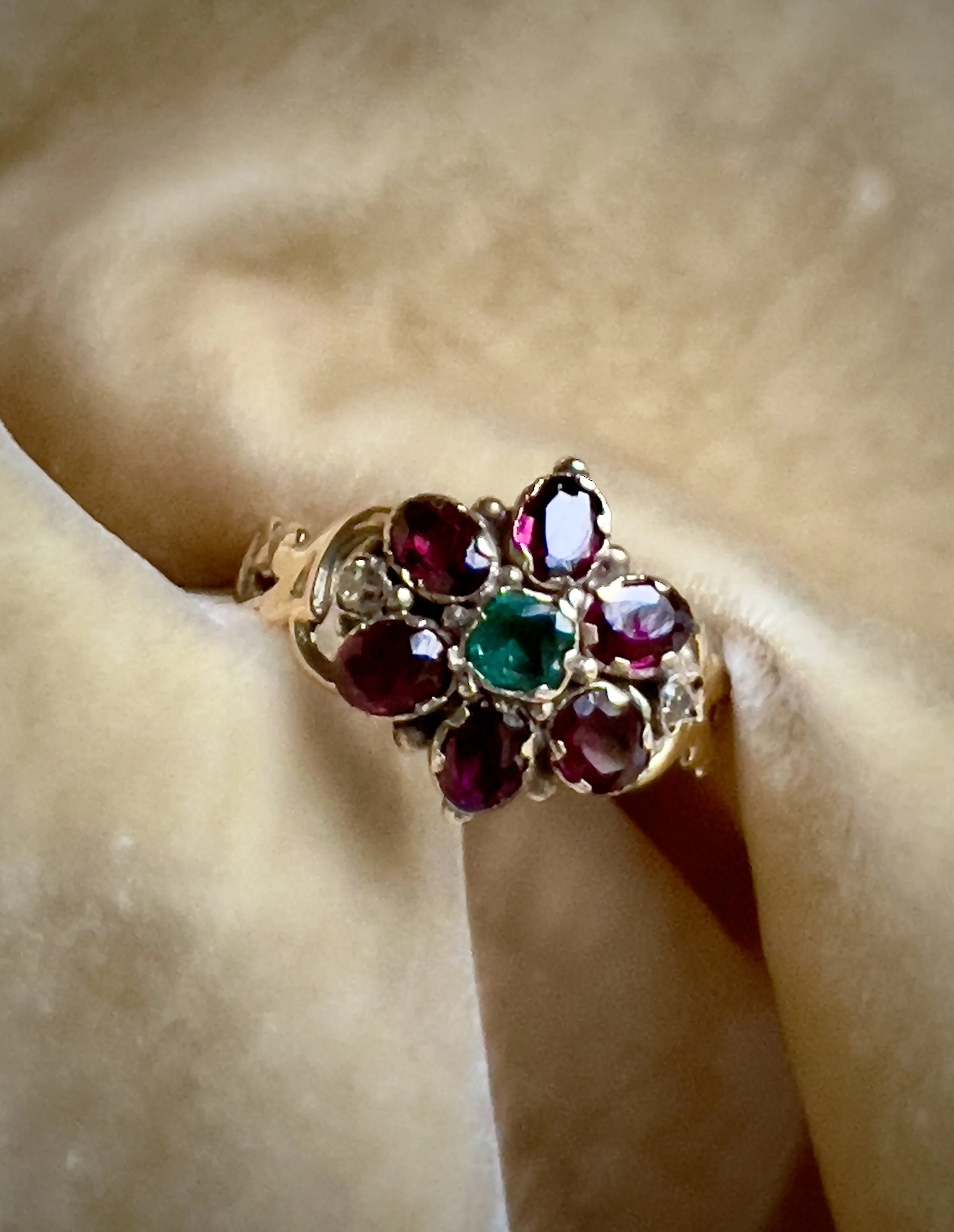 Image 1 of 15
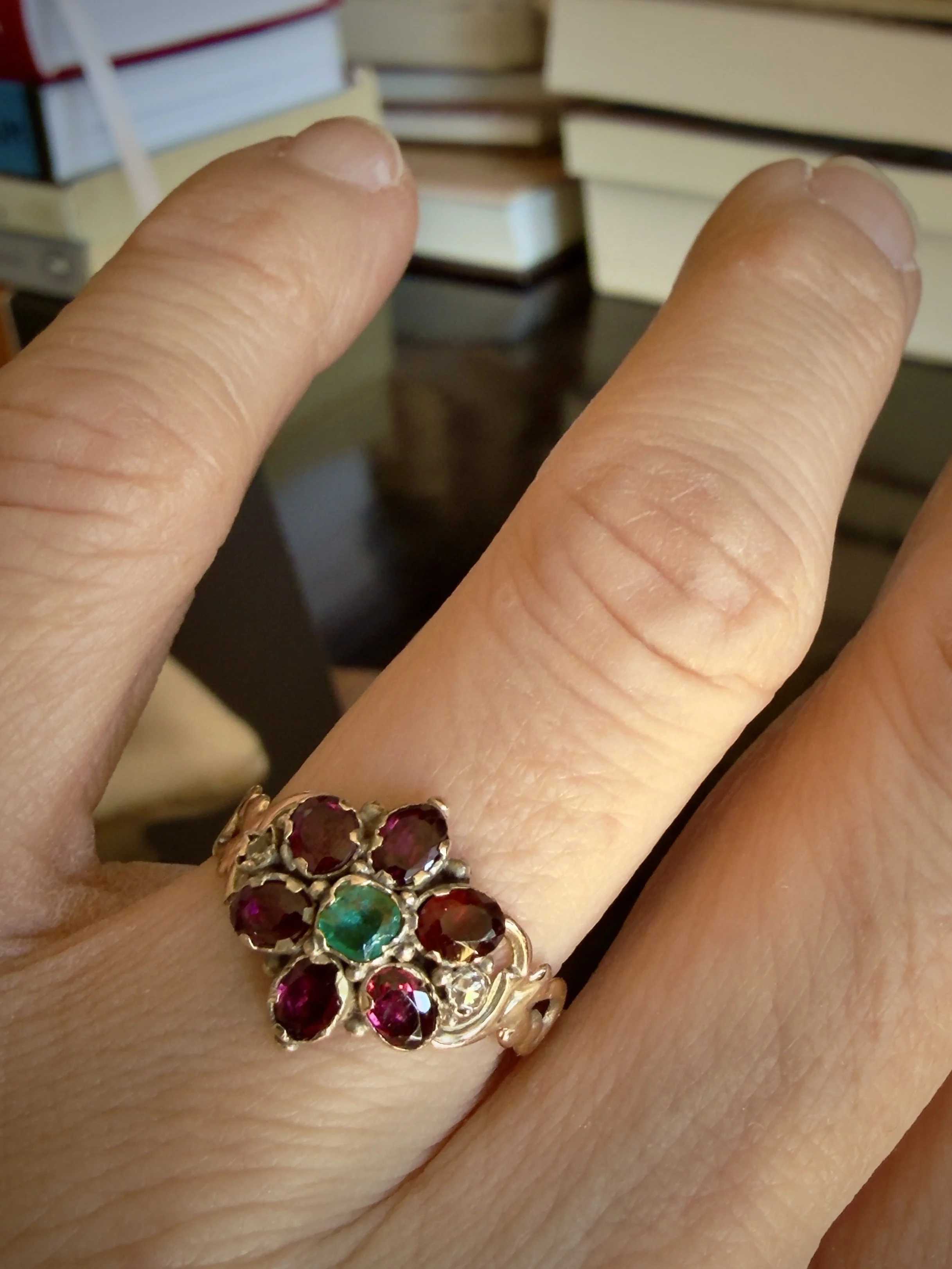 Image 2 of 15
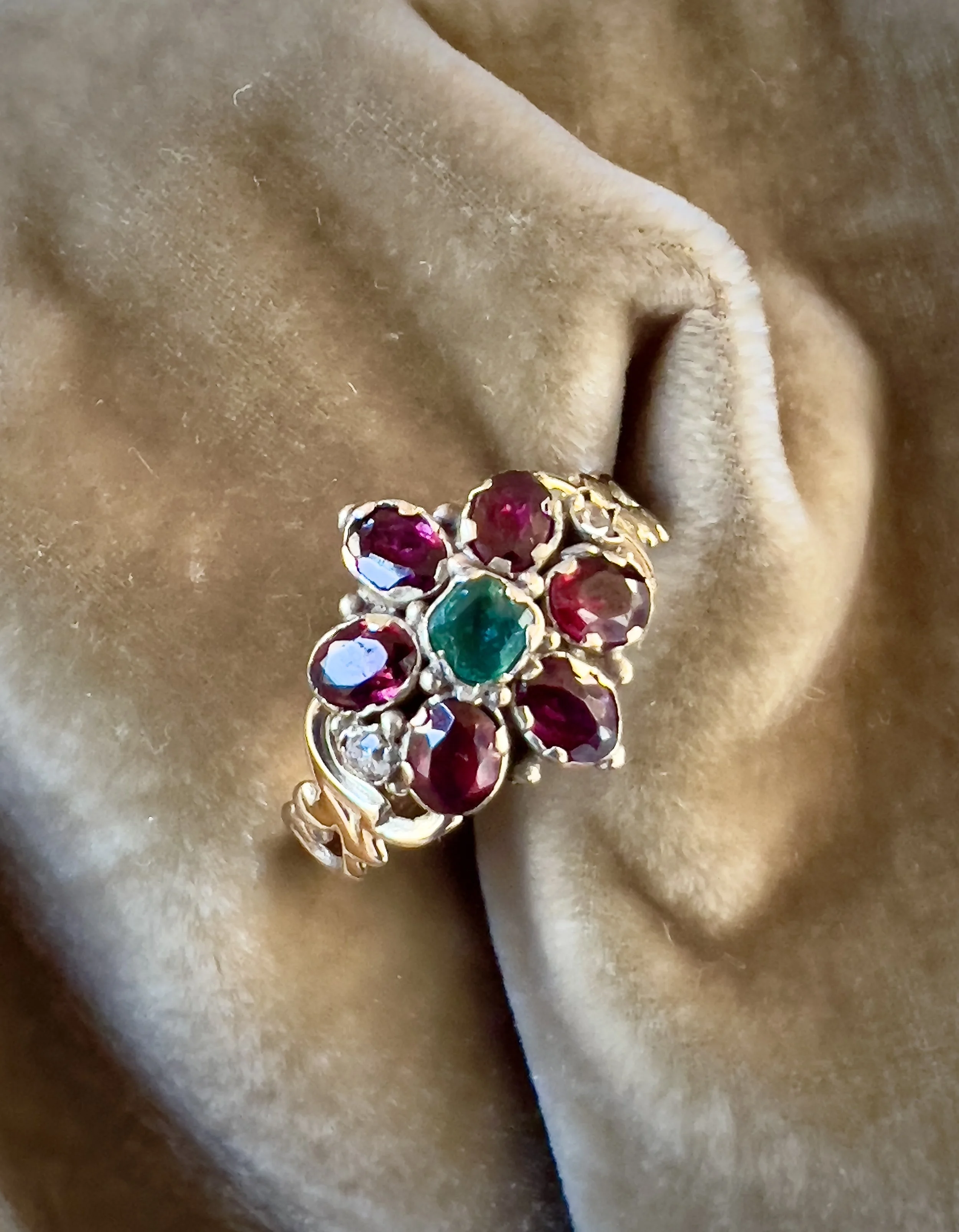 Image 3 of 15
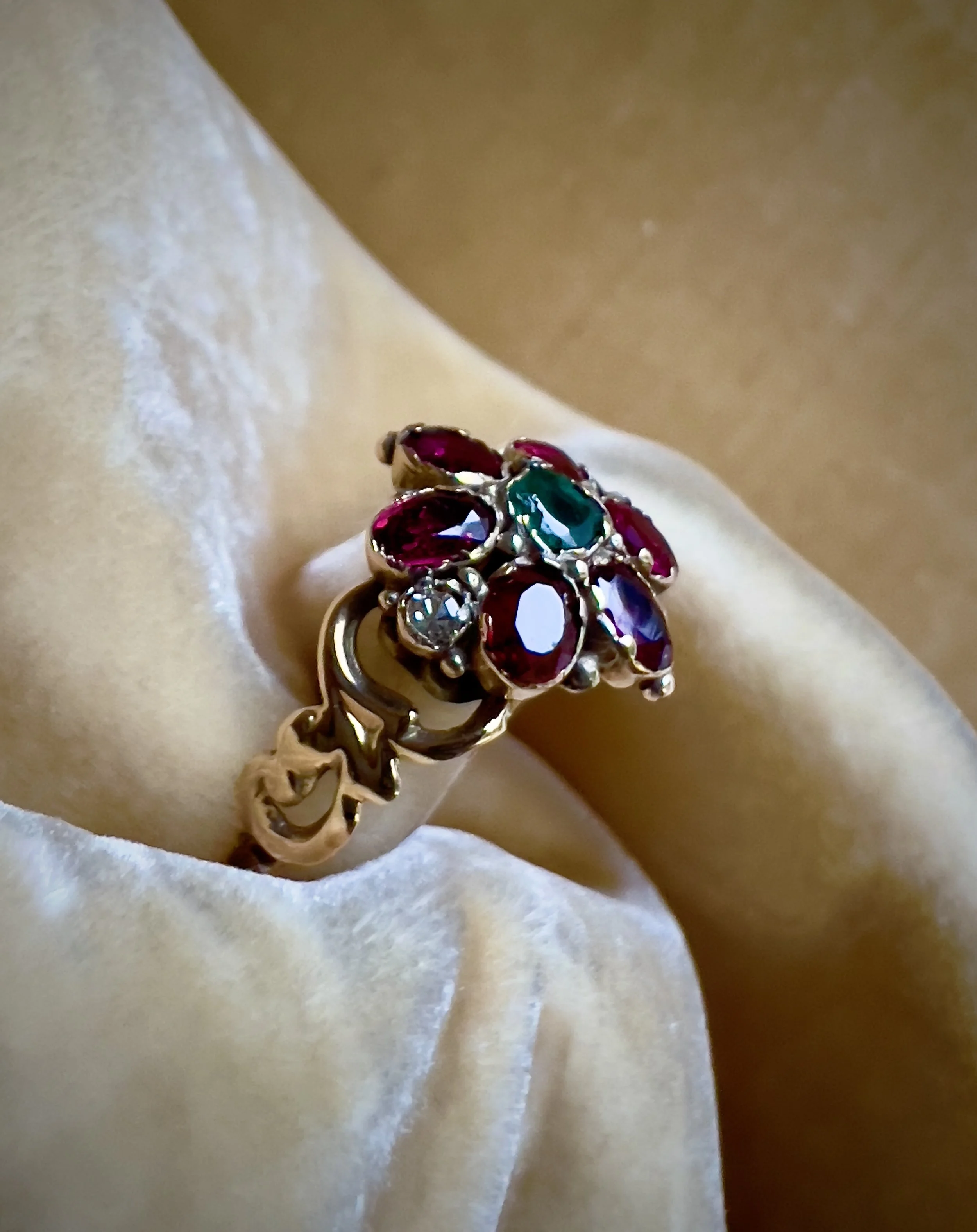 Image 4 of 15
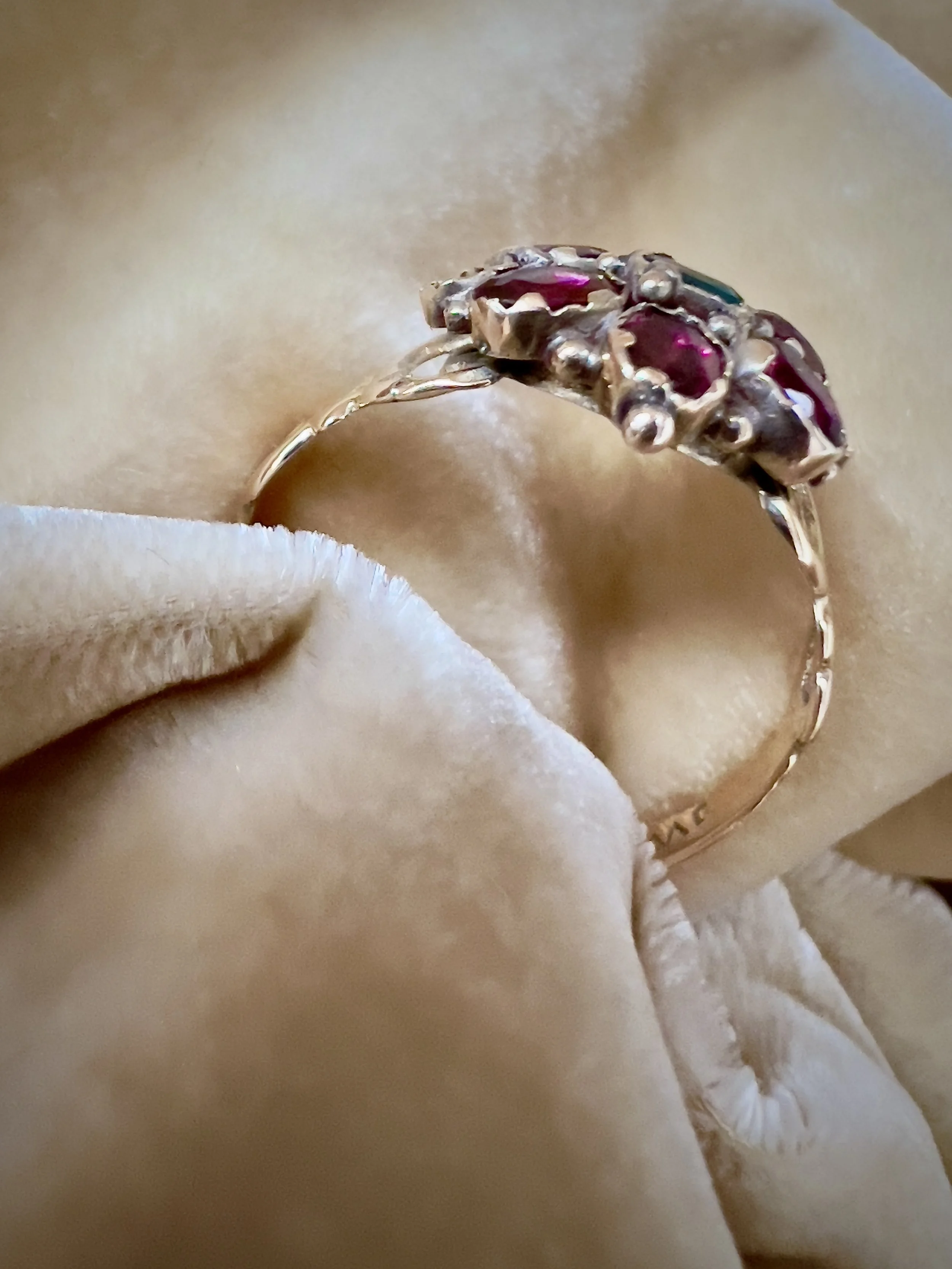 Image 5 of 15
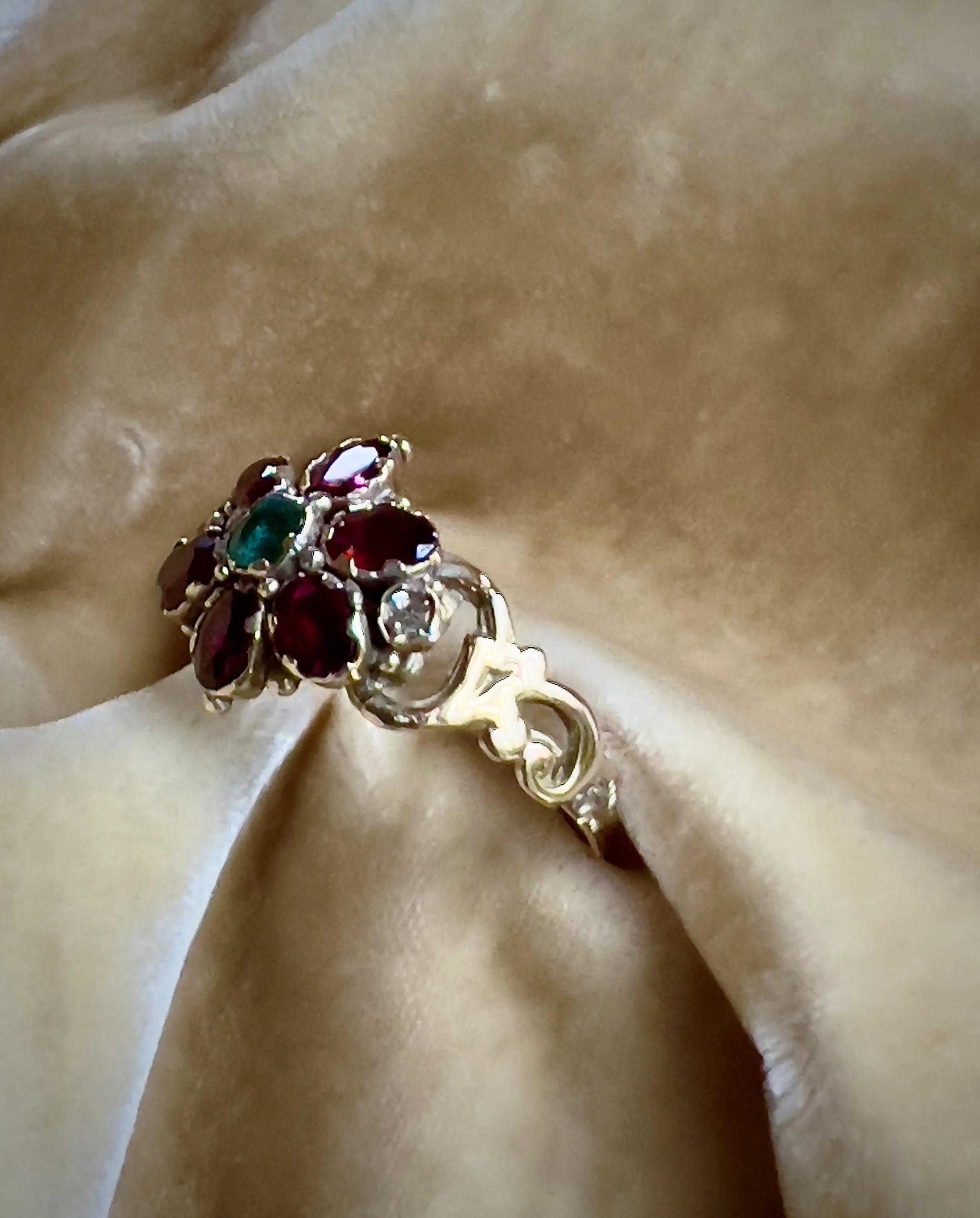 Image 6 of 15
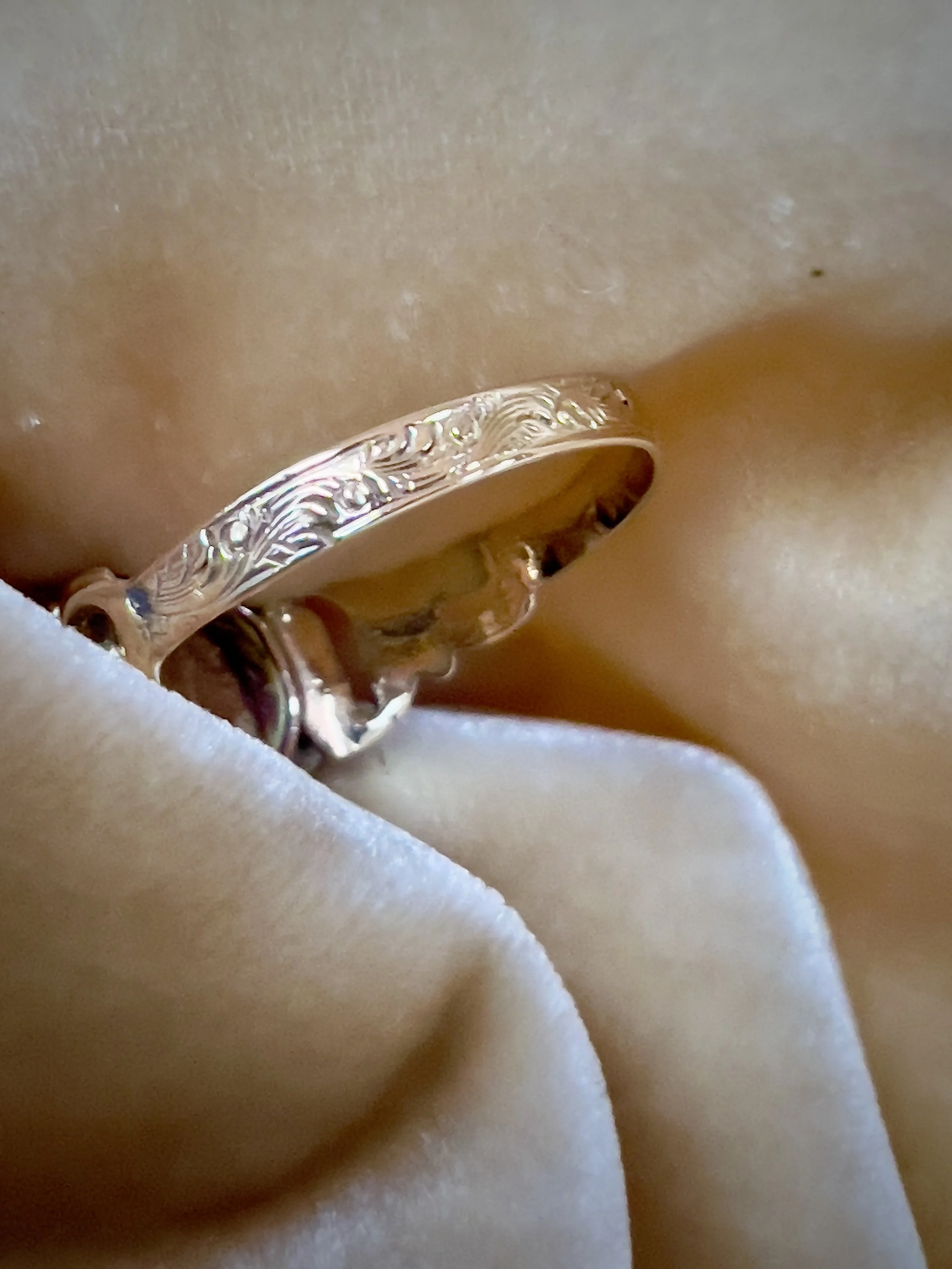 Image 7 of 15
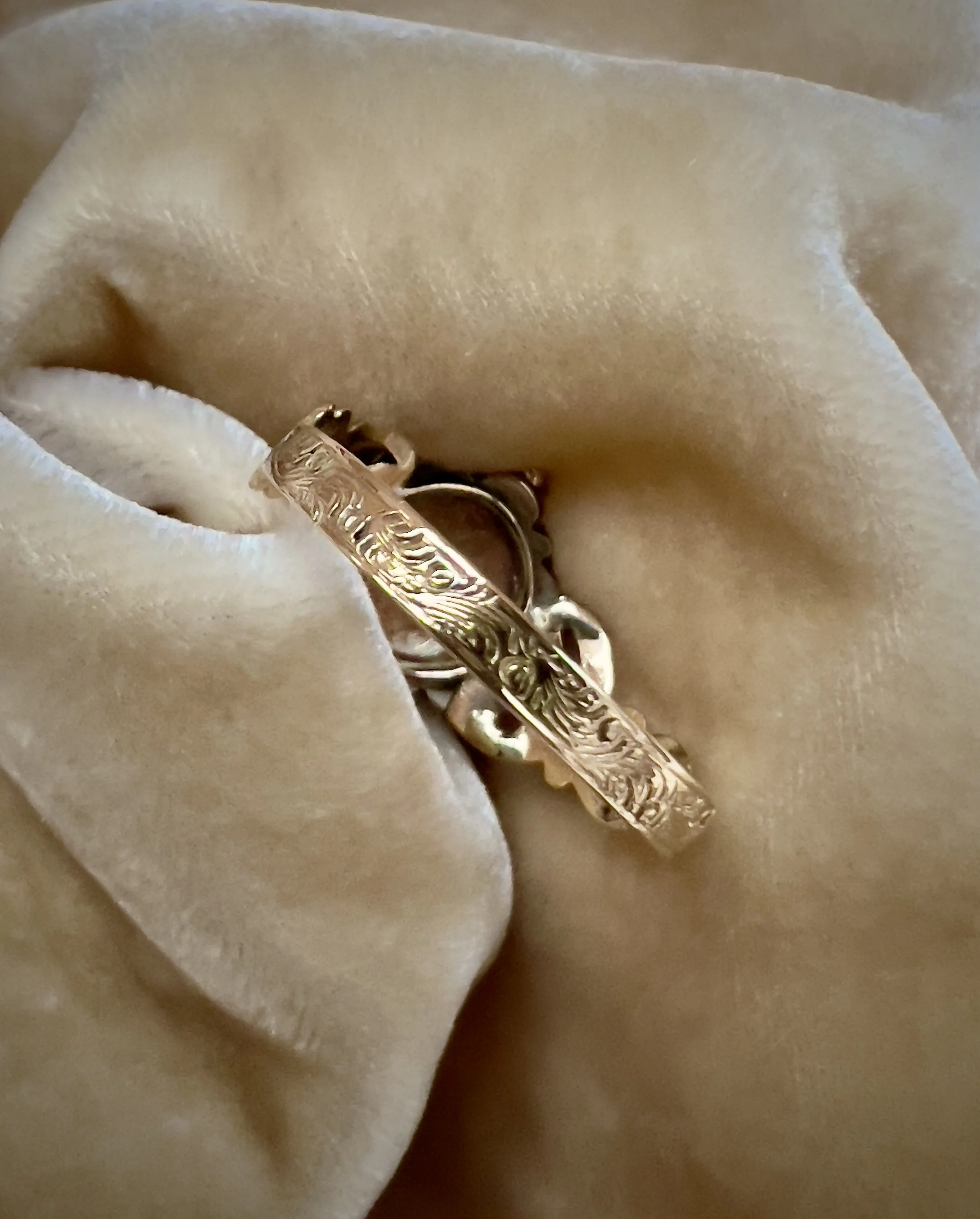 Image 8 of 15
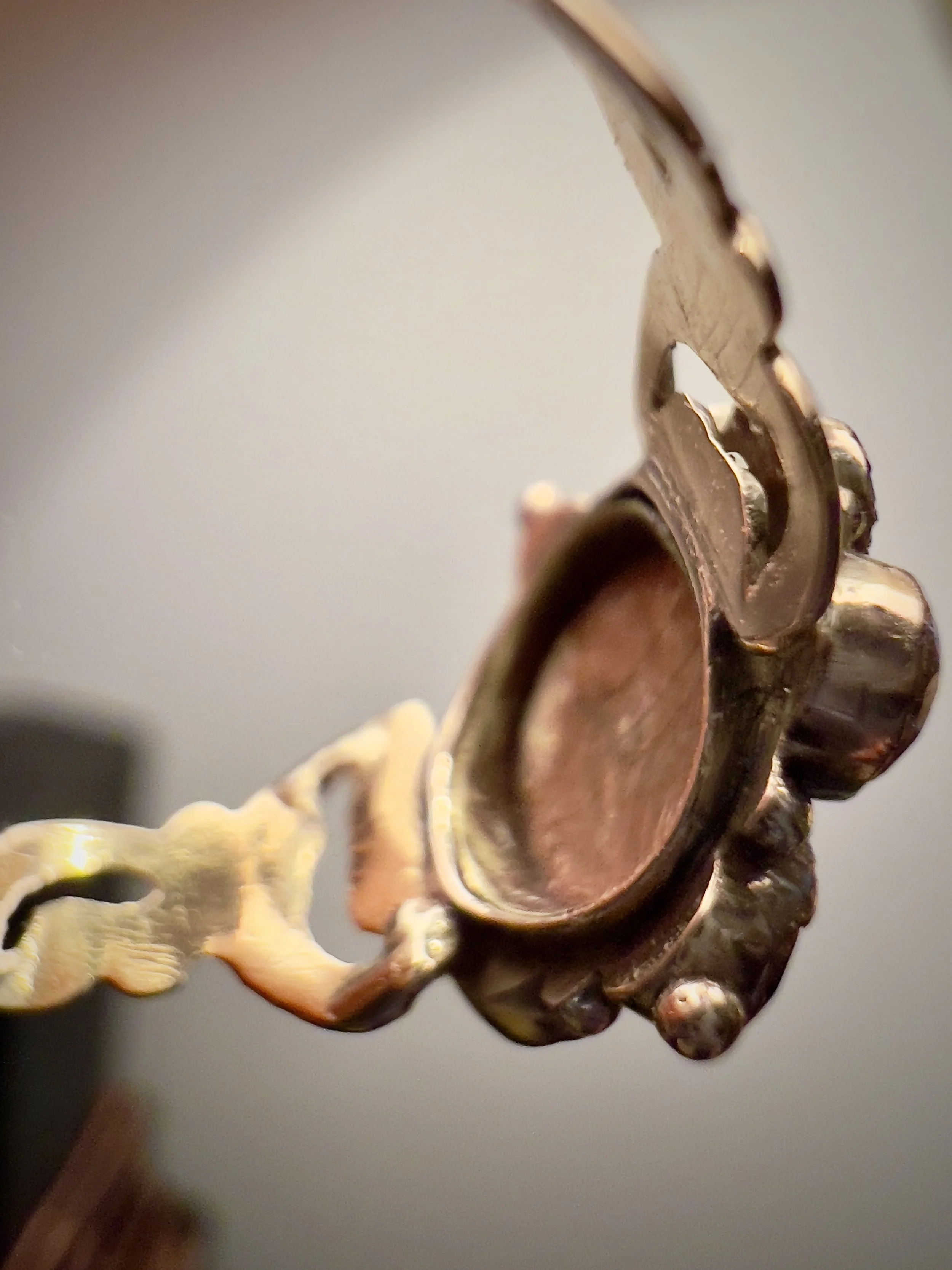 Image 9 of 15
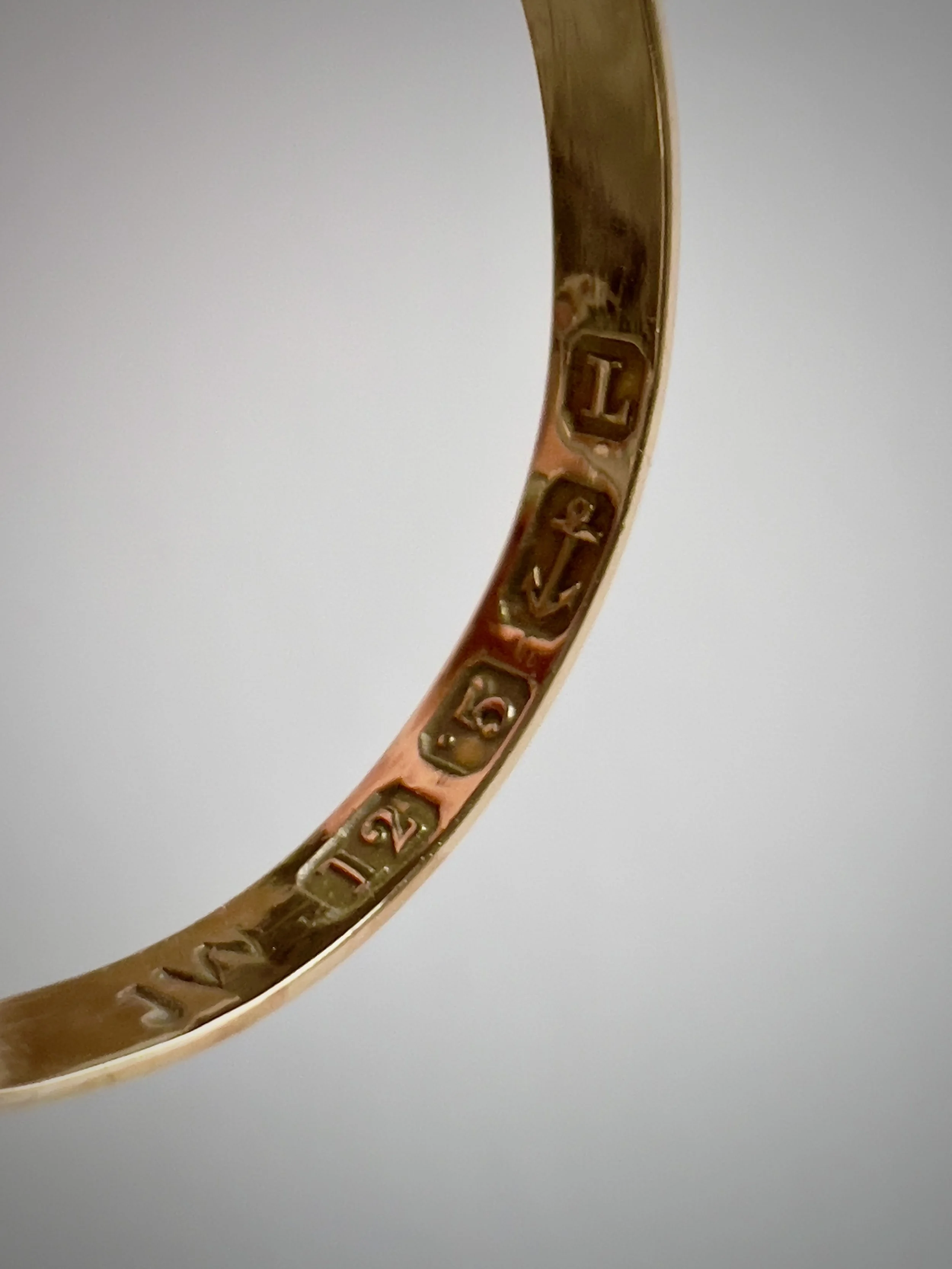 Image 10 of 15
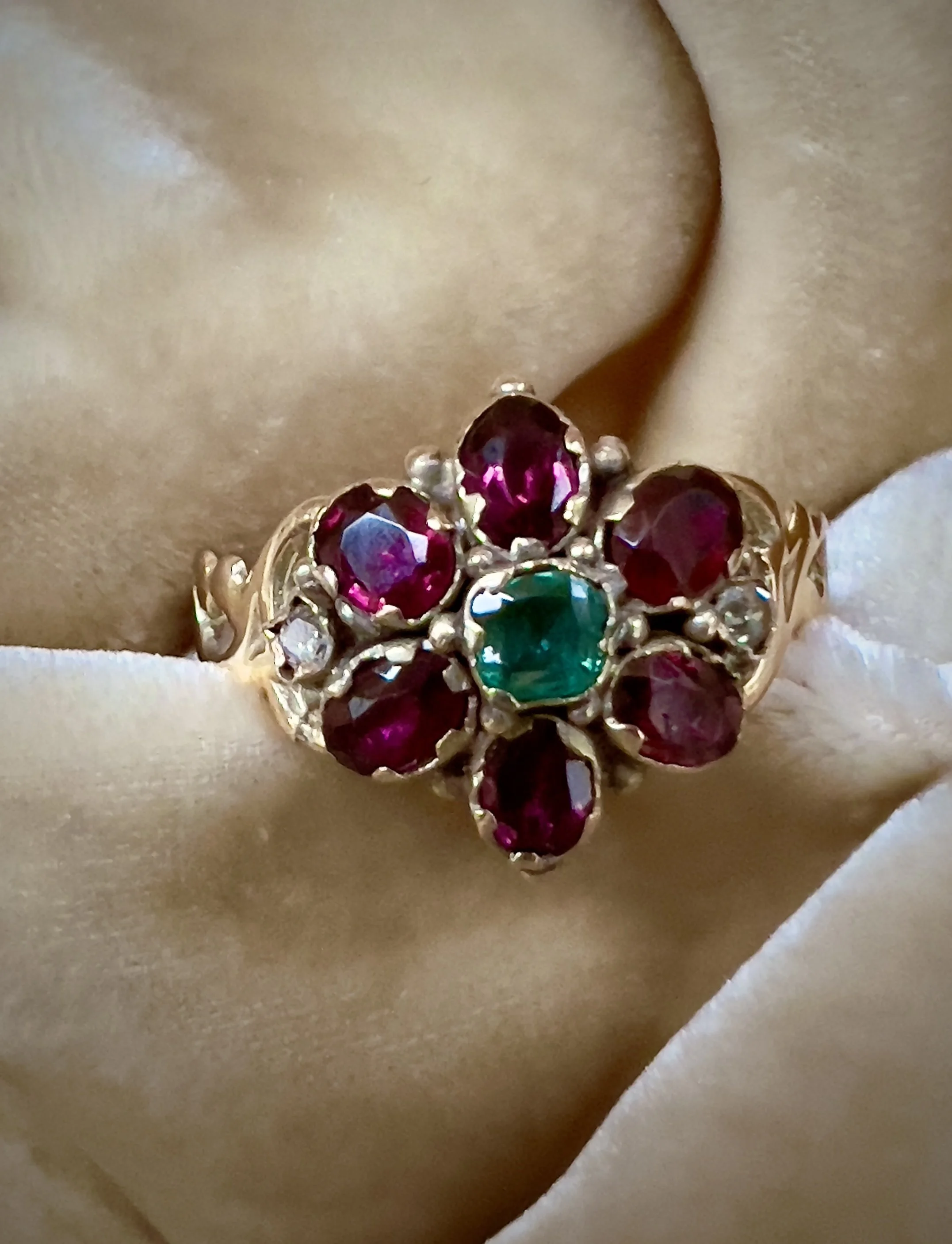 Image 11 of 15
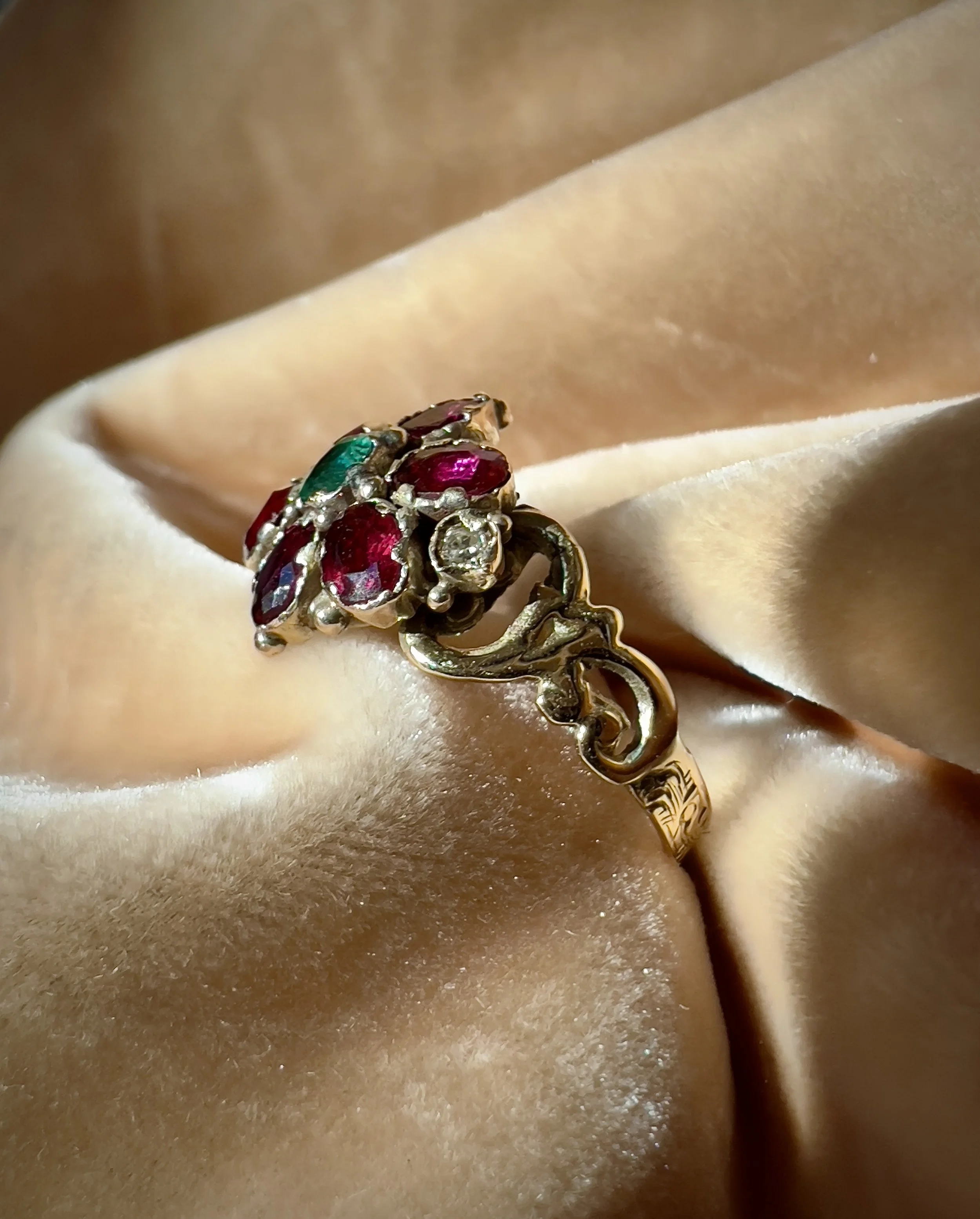 Image 12 of 15
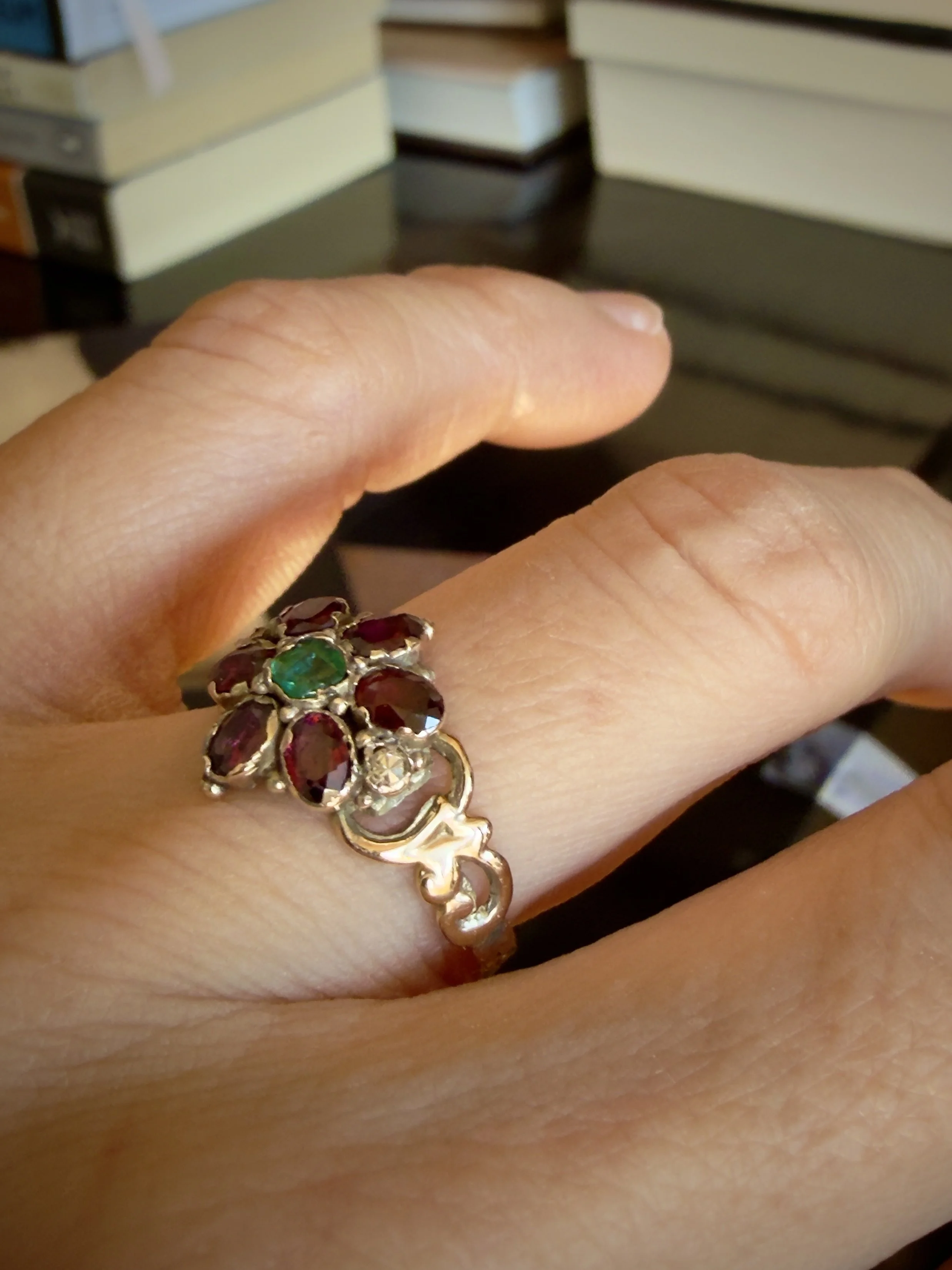 Image 13 of 15
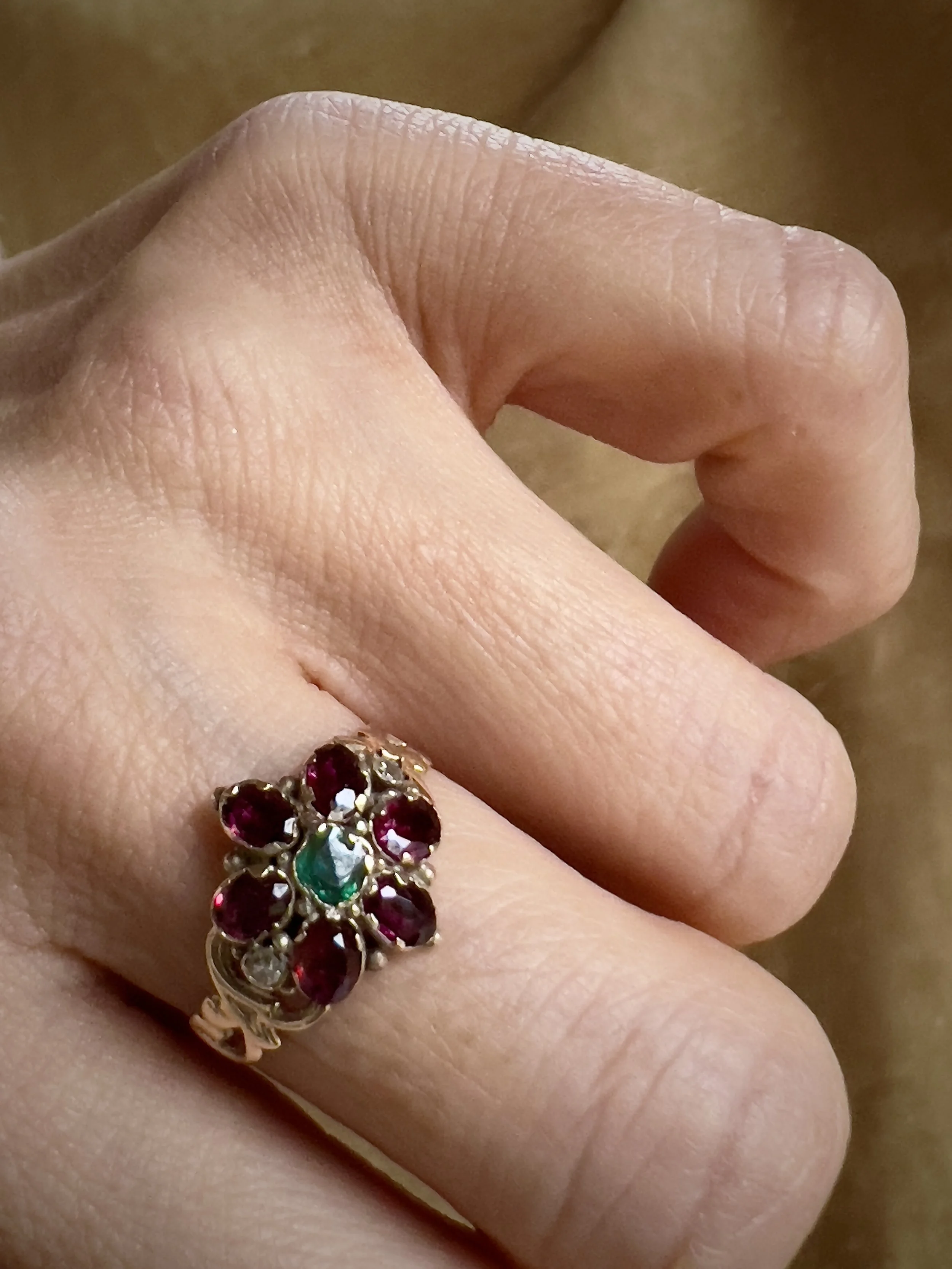 Image 14 of 15
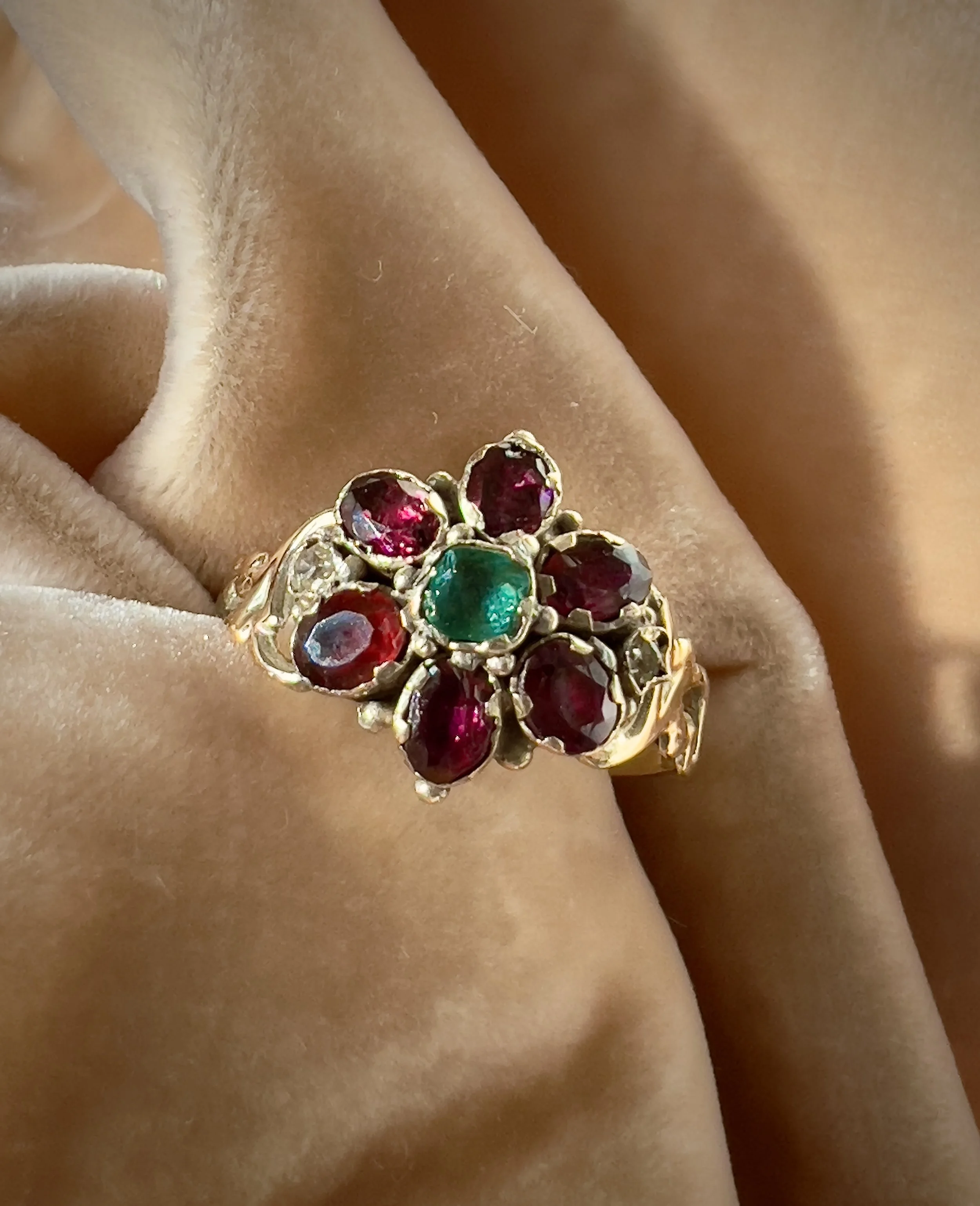 Image 15 of 15